
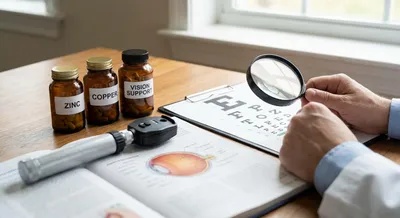
Zinc, Copper, and Optic Neuropathy: When Supplements Mimic Glaucoma Progression
It’s worth noting that many people regularly exceed safe zinc intakes. The National Institutes of Health advise that healthy adults only need about...
Deep research and expert guides on maintaining your visual health.
It’s worth noting that many people regularly exceed safe zinc intakes. The National Institutes of Health advise that healthy adults only need about...
Blind spots often develop gradually without symptoms. Start a free trial and take a quick visual field test to spot changes early.
Find Out NowCopper deficiency happens when the body doesn’t have enough of the mineral copper to support normal processes. Copper is critical for making red blood cells, helping nerves work properly, forming connective tissue, and supporting energy production, so not having enough can lead to a range of symptoms. Early signs can include fatigue, pale skin from anemia, and frequent infections because the immune system is affected. As it progresses, people may develop nerve-related problems such as numbness, weakness, trouble walking, and even changes in vision. Causes include poor diet, conditions that prevent absorption in the gut, certain surgeries, or interactions with other minerals that block copper uptake. Because some causes are treatable, identifying the deficiency early matters: appropriate dietary changes or supervised supplementation can prevent permanent damage. Diagnosis typically involves blood tests and a review of medical history, so seeing a healthcare provider is important if symptoms arise. Treating the root cause and restoring copper under medical guidance usually improves symptoms, but severe or longstanding deficiency can lead to lasting problems.