
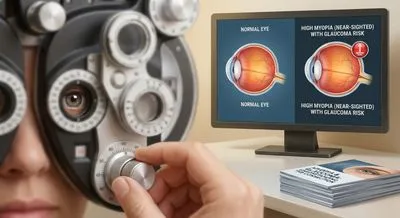
Myopie und Glaukom: Wenn Kurzsichtigkeit die Risiken erhöht
Die Diagnose eines Glaukoms bei myopen Augen ist schwierig. Moderate bis hohe Myopie verändert die Form und Anatomie des Auges, was die...
Tiefgehende Forschung und Expertenratgeber zur Erhaltung Ihrer Sehgesundheit.
Die Diagnose eines Glaukoms bei myopen Augen ist schwierig. Moderate bis hohe Myopie verändert die Form und Anatomie des Auges, was die...
Starten Sie Ihren kostenlosen Gesichtsfeldtest in weniger als 5 Minuten.
Test jetzt startenEin OCT-Scan ist eine moderne, bildgebende Untersuchung des Auges, die feinste Schichten der Netzhaut und des Sehnervs sichtbar macht. Die Abkürzung OCT steht für optische Kohärenztomographie, eine Technik, die mit Licht statt Röntgen- oder Ultraschallwellen arbeitet. Das Gerät erzeugt schichtweise Querschnittsbilder, mit denen Ärztinnen und Ärzte sehr genau messen können, wie dick bestimmte Schichten der Netzhaut sind. Der Scan ist schmerzfrei, berührungslos und dauert meist nur wenige Minuten pro Auge. Er hilft, frühe Veränderungen zu erkennen, die mit Erkrankungen wie dem Grünen Star, der Makuladegeneration oder myopiebedingten Schäden zusammenhängen können. Ein wichtiger Nutzen ist die Möglichkeit, Verläufe genau zu verfolgen: kleine Änderungen zwischen zwei Untersuchungen zeigen, ob eine Behandlung wirkt oder ob sich eine Erkrankung verschlechtert. Allerdings können Bildfehler durch starke Kurzsichtigkeit, Hornhauttrübungen oder unruhiges Fixieren entstehen, sodass die Aufnahmen manchmal schwer interpretierbar sind. Die Auswertung erfolgt durch Fachleute, die Messwerte und Bilder mit früheren Aufnahmen vergleichen und so Empfehlungen für Therapie oder Kontrolle geben. Ein OCT-Scan ersetzt nicht die gesamte Untersuchung, ergänzt sie aber um sehr detaillierte Informationen, die mit einfachen Sehtests nicht sichtbar wären. Weil die Untersuchung schnell und schonend ist, wird sie häufig zur Vorsorge und zur regelmäßigen Kontrolle bei bekannten Augenproblemen eingesetzt.