
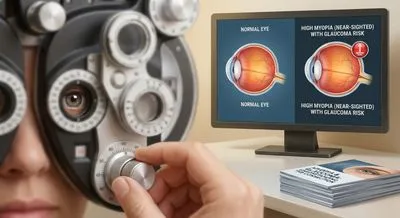
Myopia ja glaukooma: Kun likinäköisyys nostaa panoksia
Glaukooman diagnosointi myooppisissa silmissä on hankalaa. Kohtalainen tai korkea myopia muuttaa silmän muotoa ja anatomiaa, mikä vaikeuttaa...
Syvällistä tutkimusta ja asiantuntijaoppaita näön terveyden ylläpitämiseen.
Glaukooman diagnosointi myooppisissa silmissä on hankalaa. Kohtalainen tai korkea myopia muuttaa silmän muotoa ja anatomiaa, mikä vaikeuttaa...
Näkökentän menetys glaukooman kaltaisista tiloista voi jäädä huomaamatta. Aloita ilmainen kokeilu ja seulonta mahdollisille sokeille pisteille muutamassa minuutissa.
Myopia tarkoittaa näönvaikeutta, jossa kaukana olevat esineet näyttävät epätarkoilta, mutta läheltä näkee yleensä hyvin. Se johtuu usein silmän liian pitkänomaisesta muodosta tai liian voimakkaasta taittovoimasta, jolloin valonsäteet tarkentuvat ennen verkkokalvoa. Myopia alkaa usein nuoruudessa ja voi pahentua kasvun aikana, mutta se voi esiintyä myös aikuisilla. Yleisiä oireita ovat sumea näkö kaukana, tarve kurkottaa tai siristää silmiä sekä päänsärky, jos yrittää nähdä terävästi. Selkeä diagnoosi saadaan optikon tai silmälääkärin tutkimuksessa, jossa mitataan näöntarkkuus ja selvitellään silmän taittovirhe. Korjaus tapahtuu yleensä silmälaseilla tai piilolinsseillä, jotka siirtävät valon tarkasti verkkokalvolle. Joillekin sopii myös leikkaushoito, kuten laserleikkaus, joka muuttaa sarveiskalvon muotoa pysyvämmän korjauksen saamiseksi. Nykyään on myös keinoja hidastaa etenemistä, kuten erityiset piilolinssit tai lääkehoito, ja ulkoilun lisääminen lapsilla voi vähentää riskin kasvua. On tärkeää seurata myopian etenemistä, koska voimakas myopia lisää riskiä myöhemmille silmäongelmille, kuten verkkokalvon repeämälle ja glaukoomalle.