
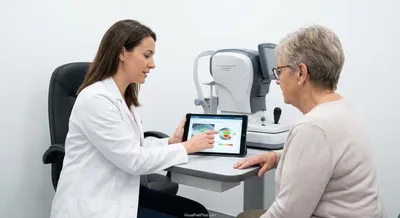
The Future of Glaucoma Care May Be Personal: Matching Treatment to Each Patient’s Risk
Today we are on the brink of truly personalized glaucoma care, where doctors will tailor follow-up plans and treatments to each person’s unique risk...
Deep research and expert guides on maintaining your visual health.
Today we are on the brink of truly personalized glaucoma care, where doctors will tailor follow-up plans and treatments to each person’s unique risk...
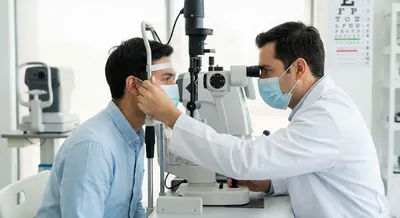
Regular comprehensive eye exams are critical because glaucoma damage is often silent until it is advanced. By getting an exam early (a “baseline”...
Our visual field test is inspired by the perimetry methods eye care professionals use. Check for blind spots and track changes over time.
Test Your VisionGlaucoma risk factors are the conditions and characteristics that make a person more likely to develop the disease that damages the optic nerve. Knowing these factors helps doctors and patients focus on prevention and early detection. Common risk factors include older age, a family history of the disease, and elevated pressure inside the eye. Certain medical issues like diabetes, high blood pressure, and poor blood circulation also increase the chance of developing glaucoma. Different racial and ethnic groups may face higher risk for particular forms of the disease, so ethnicity and background can be important to consider. Other factors include a history of eye injury, previous eye surgery, very nearsighted vision, and use of steroid medications for a long time. A thin central cornea is another measurable feature that can be associated with higher risk, and eye care providers often test for this. Because multiple risk factors can combine, people with several of these characteristics should have more frequent screenings. Understanding personal risk factors matters because it guides how often you get checked and what preventive steps or treatments might be recommended. If you are concerned about your risk, discussing it with an eye care professional can clarify which steps will best protect your vision.